
Define the approval question
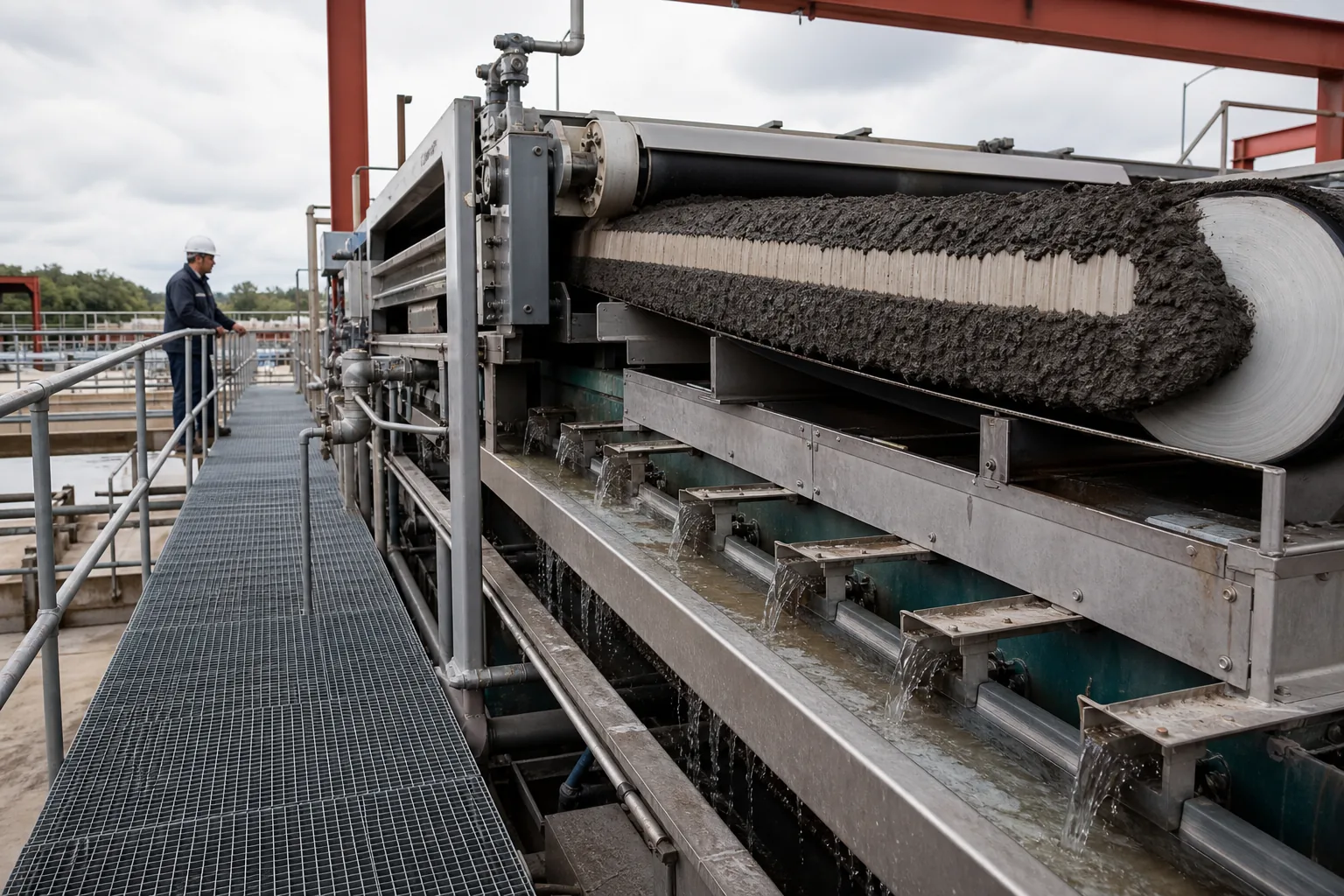
Collected dairy DAF sludge is a dewatering feed distinct from the incoming wastewater being floated. A buyer should specify which stage requires polymer and characterize the collected solids before comparing cationic emulsions intended for the downstream machine.
Identify the product code, representative sludge and operating constraint before requesting a commercial commitment.
Identify the collected sludge condition
Record flotation chemicals, fat or oil context, solids, pH, storage time and any biological-sludge blend. Track cleaning and production states that materially change the collected sludge. Use the industrial feed record while keeping DAF solids separate from biological sludge where they differ.
Do not transfer a successful wastewater-flotation dose directly to the collected-sludge dewatering line. The feed concentration and required physical result are different.
Separate carryover from polymer demand
Compare the candidate set against current collected sludge under controlled preparation. Record upstream coagulant carryover and sample temperature as context. Keep companion chemicals fixed during a direct flocculant comparison; if the full program changes, document the larger scope.
Observe filtrate or centrate quality and drainage across a dose curve. A visible large floc may still form a compressible or difficult-to-release cake.
Set machine and handling criteria
Measure cake, capture, throughput, release and cleaning demand at the actual separator. Include storage and transfer of the selected emulsion in the trial boundary. Link product code and accepted dose to the expected commercial consumption.
Use the cost comparison only after treatment performance is aligned; do not assign unmeasured disposal or cleaning benefits to the new grade.
Challenge a favorable comparison
A warm fresh sample can behave differently from stored sludge reaching the press after a shutdown. Qualify the routine storage condition before using a short fresh-sample result to forecast weekly polymer demand or guarantee cake handling.
Record the unresolved boundary with the trial result. An expected operating benefit is not a measured saving or an unrestricted product guarantee.
Keep the acceptance record
| Buying check | Evidence | Acceptance limit |
|---|---|---|
| Stage | Collected sludge, not inlet wastewater | Correct purchase duty |
| Variability | Production, storage and carryover | Difficult condition included |
| Machine | Capture, cake and release | Commercial use accepted |
Retain sample identity, measured preparation conditions and synchronized feed and outlet results. Use the record to distinguish an agreed product change from a change in sludge or equipment.
Prepare the supplier brief
Send DAF chemical information, collected-sludge solids and storage, blending, machine type, current dose and handling problem. State explicitly that the requested sample is for downstream sludge dewatering.
Send the evidence through the cationic emulsion sample and RFQ form. Confirm the offered code, availability, packaging and document scope with Gongyi Xinqi Polymer Co., Ltd. before ordering.