
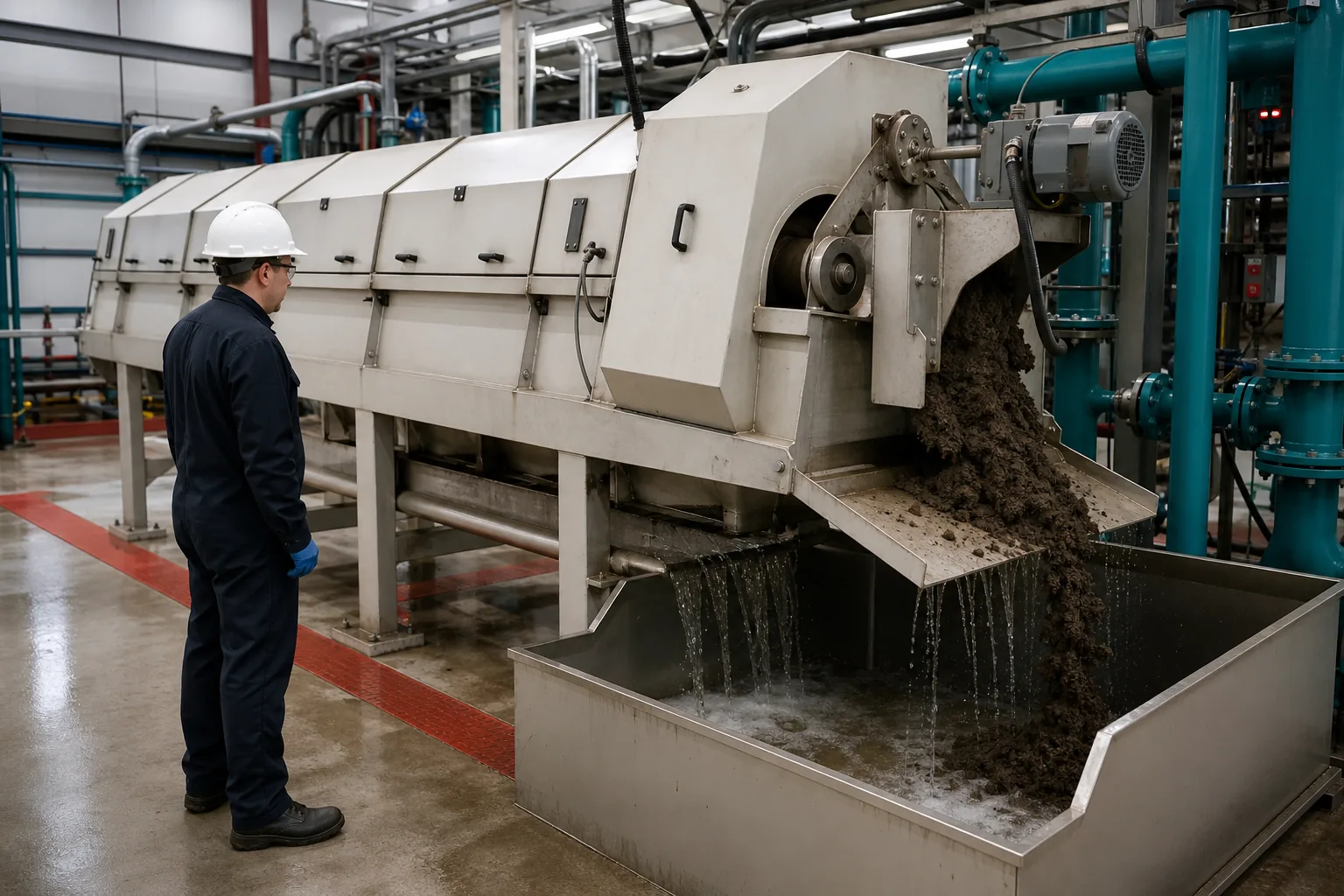
Avoid single-metric selection
A drier cake can reduce hauling, but it is not valuable if solids escape in centrate, throughput falls or polymer cost rises sharply. Define the minimum acceptable values for cake, capture and production together.
Use aligned mass-balance samples and stable runs. Snapshot readings taken at different feed conditions are not a fair comparison.
Normalize chemical consumption
Convert neat emulsion flow to active-polymer mass and divide by dry-solids loading. Calculate chemical cost per dry tonne from the delivered product price, density and active content.
This removes the distortion created by comparing litres or drums when products have different concentrations.
Value solids capture
Lost solids can return load to treatment, reduce saleable or recoverable material, or increase discharge risk. Include the operational value of improved capture where the plant can quantify it.
Do not assume visually clear centrate means identical capture. Use a measured solids concentration or mass balance.
Value cake and throughput
Translate cake-solids change into wet mass transported per dry tonne. Add equipment throughput, cycle time, wash water, energy and operator interventions when they materially differ.
A wider stable operating window can be more valuable than a narrow laboratory optimum if feed variability is high.
Create the award record
Summarize feed conditions, grade, active dose, preparation, settings, cake, capture, throughput and cost. State uncertainty and any untested seasonal condition.
Attach the record to the purchase specification so price is compared against verified process value.
Account for process variability
Calculate performance across normal and difficult feed periods instead of multiplying one short optimum across the year. Include the frequency and cost of off-spec cake, centrate recycles, belt washing or operator intervention.
A stable product can reduce variability even when its average cake solids are similar. Quantify that benefit with fewer excursions, more predictable throughput or lower emergency chemical use where records support it.
Review value after purchase
Compare actual monthly active dose, capture, cake solids and wet-cake disposal with the trial forecast. Investigate deviations before assuming price or product quality is the only cause.
Repeat the mass balance after major seasonal or process changes. A purchase decision remains useful only while the original feed and equipment assumptions continue to represent operation.
Test disposal-cost sensitivity
Calculate how the commercial ranking changes when hauling or disposal price, cake solids, active dose and capture move within realistic ranges. This prevents a small uncertain laboratory difference from dominating the award decision.
State which variables have the greatest financial effect and monitor those after implementation. In some plants cake wet mass dominates; in others throughput, solids return or operator intervention is more important.
Include chemical handling cost
Add unloading time, package residue, transfer losses, tote return or drum disposal and any special storage requirement when these differ between offers. A lower neat price can lose its advantage when product turnover or packaging does not fit the plant consumption pattern.
Use actual purchasing and operating records where possible. Keep one-time commissioning work separate from recurring cost so the comparison remains useful for both initial award and later supply review.