
Capture feed variability
Industrial biological sludge can change with production campaigns, cleaning cycles, salinity and load shocks. Composite the conditions that matter or test distinct operating states rather than averaging away a difficult feed.
Record conductivity, pH, temperature, oil or surfactant carryover, total solids and upstream chemistry. These variables can change charge demand and emulsion activation.
Screen chemistry and equipment together
Use adjacent cationic charge profiles and a controlled dose curve. Watch water release, floc resilience and filtrate or centrate quality before transferring the best candidates to full equipment.
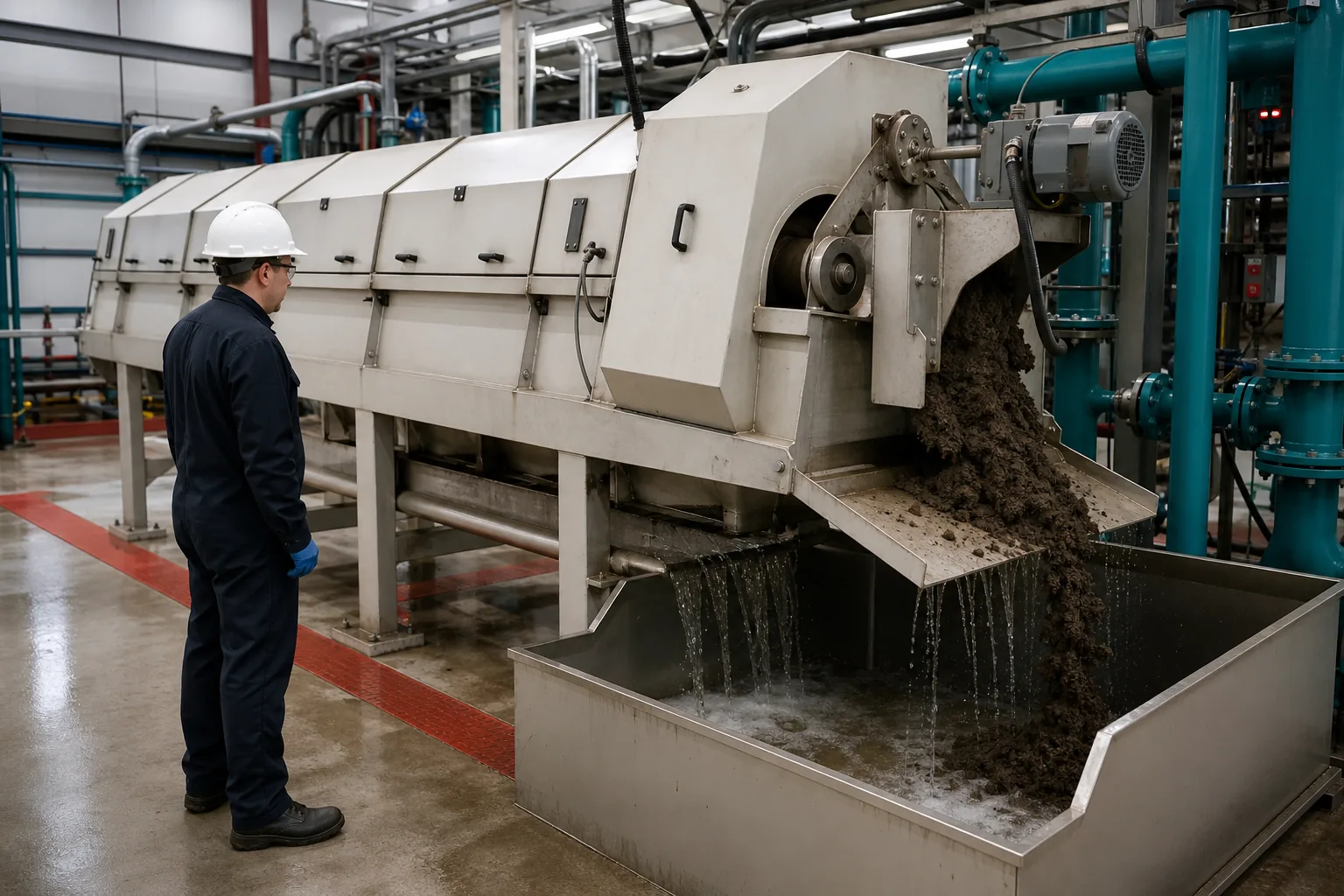
A screw press may favor a permeable floc and stable drainage; a centrifuge may favor a profile that preserves capture after the feed zone. Treat these as separate operating decisions.
Build an acceptance window
Define acceptable cake solids, capture, throughput, polymer consumption and handling behavior for normal and difficult production states. Document the make-down recipe and injection point used to achieve them.
Send both the typical and worst-case feed description in the sample and quotation brief so the proposed trial set addresses real variability.