
Define the approval question
Waste activated sludge is a useful application description, not a complete grade specification. A buyer should describe the current biological operation and the intended dewatering machine before accepting a high-charge recommendation or forecasting bulk consumption.
Identify the product code, representative sludge and operating constraint before requesting a commercial commitment.
Identify the biological feed window
Record source, thickening method, solids, temperature, sludge age where available and any primary-sludge blending. Keep upstream coagulant and major operating changes visible. The municipal application file gives the broader feed context.
Test normal and troublesome conditions separately rather than combining them into one sample that hides a short but important poor-dewatering period.
Screen charge with reproducible activation
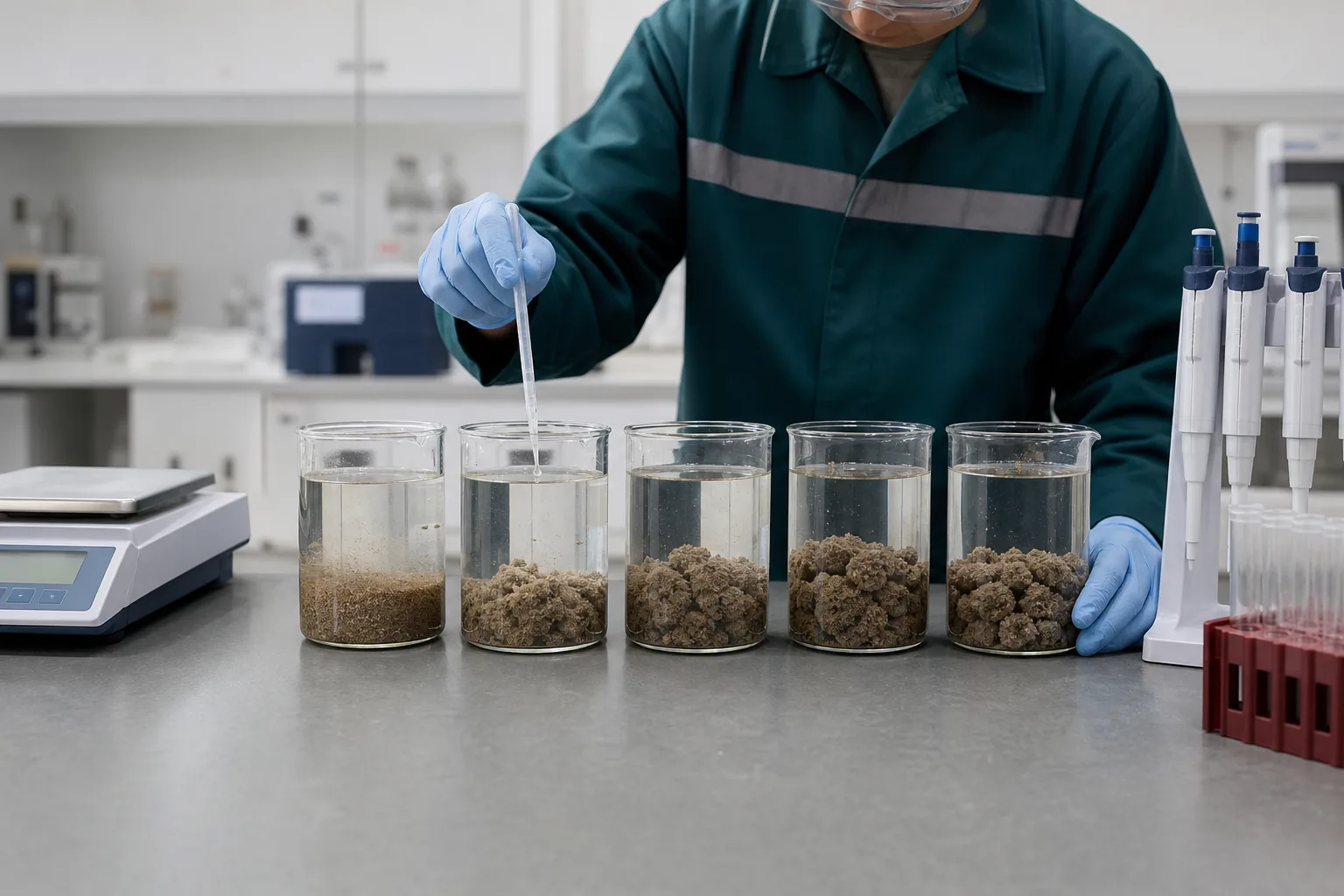
Compare adjacent candidate profiles and the incumbent using controlled preparation and equal active-dose steps. Observe fines capture and water release, not only floc size. Document any candidate-specific activation requirement before concluding the plant can reproduce the laboratory result.
The charge-density procedure supports the screen without prescribing one charge percentage for every biological sludge.
Release against the actual machine
For a centrifuge, keep centrate, cake and throughput together; for a press, include drainage, release and filtrate. Preserve synchronized feed data and calibration. Repeat the leading option under the operator control method intended for routine shifts.
A grade that works only with exceptional supervision or an unmaintainable dose setpoint has a limited qualification, which should remain explicit in the order.
Challenge a favorable comparison
A lower reported neat usage during an unusually dilute feed period can look favorable while the active dose per dry solids actually rises. Reconcile the feed mass balance before using that short run to negotiate a recurring supply quantity.
Record the unresolved boundary with the trial result. An expected operating benefit is not a measured saving or an unrestricted product guarantee.
Keep the acceptance record
| Buying check | Evidence | Acceptance limit |
|---|---|---|
| Feed | Current biological state and solids | Representative demand |
| Screen | Activated samples and dose curve | Charge assumption tested |
| Machine | Capture, cake and throughput | Routine window demonstrated |
Retain sample identity, measured preparation conditions and synchronized feed and outlet results. Use the record to distinguish an agreed product change from a change in sludge or equipment.
Prepare the supplier brief
Send sludge and thickening details, current grade, active dose, activation equipment, separator and normal versus difficult results. Specify the acceptance outputs and available trial window when requesting a candidate set.
Send the evidence through the cationic emulsion sample and RFQ form. Confirm the offered code, availability, packaging and document scope with Gongyi Xinqi Polymer Co., Ltd. before ordering.