
Describe the sludge, not only the plant
Primary sludge, waste activated sludge and digested blends can have different charge demand and water-release behavior. Record the blend ratio, total solids, volatile fraction, sludge age, pH and upstream iron or aluminum addition before screening polymer.
Sample during representative operation. Seasonal or process changes can move the optimum, so retain enough feed to compare charge profiles and doses under the same conditions.
Match the dewatering machine
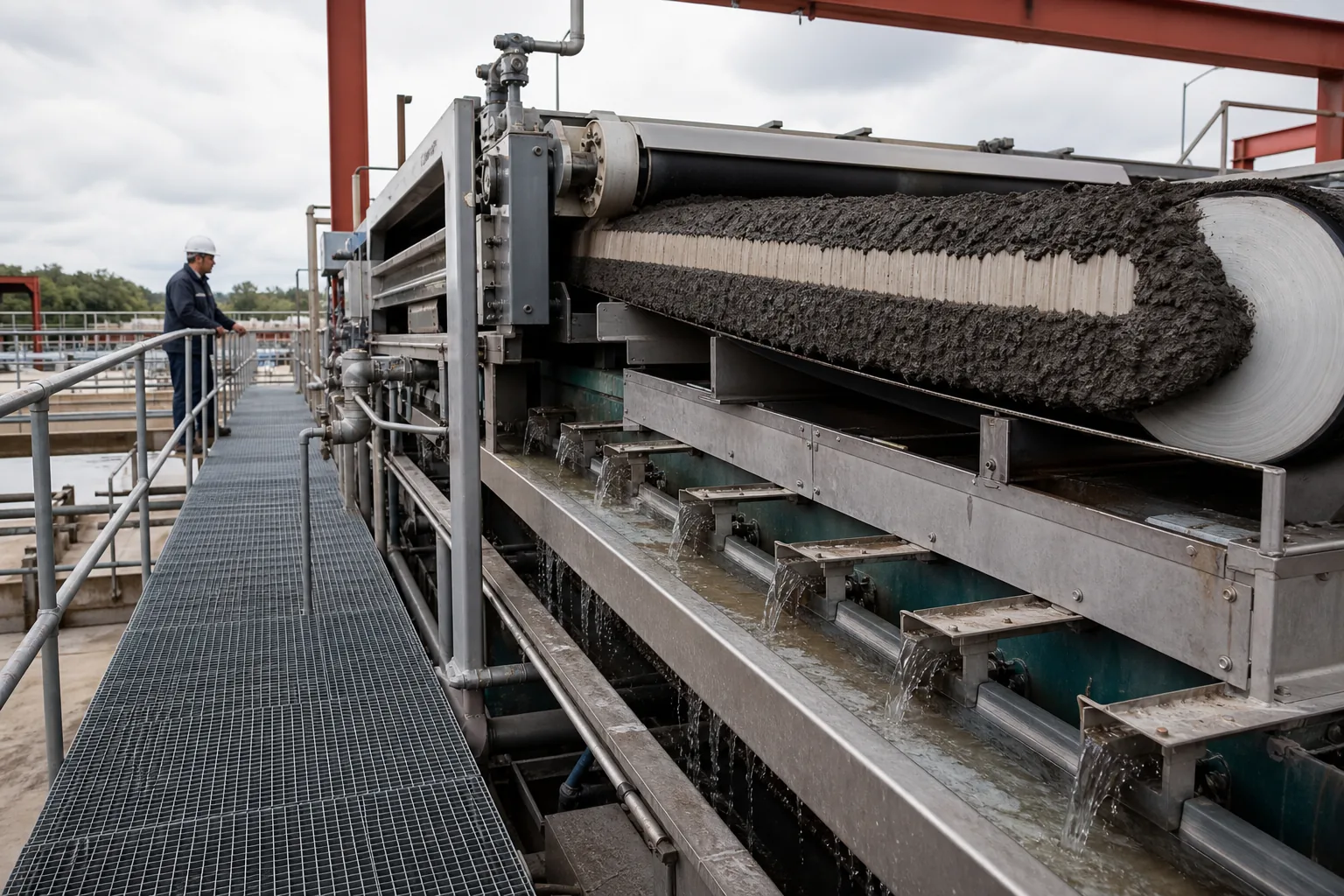
Belt presses emphasize gravity drainage, cloth release and progressive compression. Decanter centrifuges add high shear and require centrate capture, torque, pond and differential-speed observations. Screw presses depend on drainage through a gradually concentrating cake.
Use the application endpoint to define success. Cake solids matter, but so do capture, throughput, wash demand, operator stability and downstream handling.
Normalize cost per dry solids
Compare products on active-polymer mass per tonne of dry solids, not litres of neat emulsion alone. Include active content and feed total solids in the calculation, then relate cost to disposal mass and capture.
The dewatering cost guide provides a practical comparison record for trials and supplier quotations.