
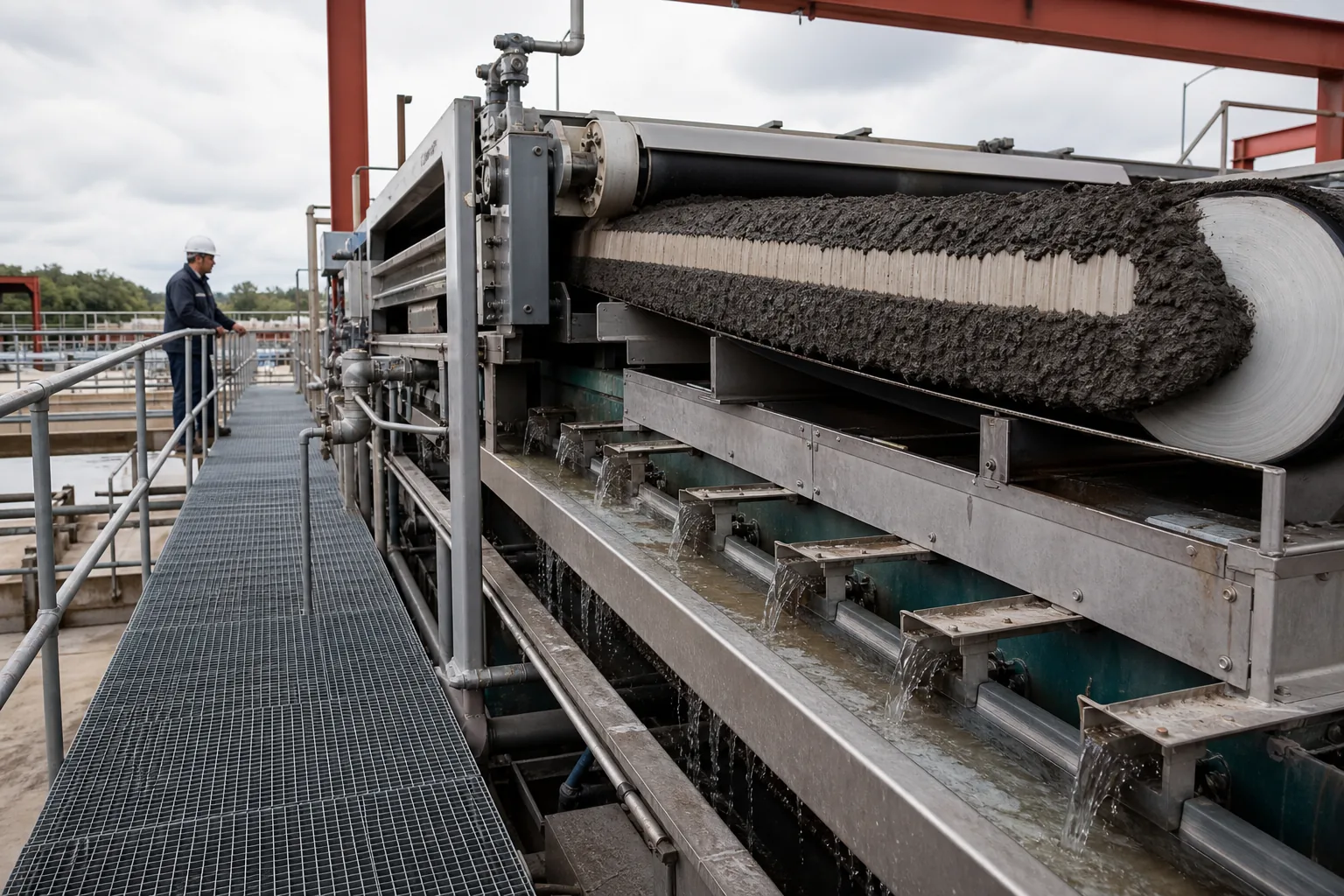
Define the approval question
Changing fiber and ash proportions can alter the conditioning question even when the stream is still called paper sludge. Procurement should specify the blend range and preserve evidence for both capture and water release before authorizing a single grade across routine production.
Identify the product code, representative sludge and operating constraint before requesting a commercial commitment.
State the blend rather than the industry
Record primary, biological and other residual fractions, total solids and ash where available. Identify the grade or furnish changes associated with poor dewatering. The paper sludge record helps expose those differences.
Use the actual operating water and upstream chemistry. Do not infer electrical demand directly from ash percentage without a controlled application comparison.
Compare complete grade responses
Screen adjacent justified profiles at equal active basis using the incumbent as a control. Measure fines retention and drainage, then observe behavior under representative compression or shear. Keep the preparation method and sample holding conditions visible.
The charge screen is a way to test a hypothesis, not a rule that every mineral-rich blend must use a different ionic family.
Check continuity across production
Take the leading candidate through the relevant blend states and normal operator adjustments. Measure cake handling, filtrate, throughput and wash behavior. Record whether one grade provides an adequate window or whether the proposed strategy requires further approval.
Avoid product switching based only on a production label. If two grades are proposed, the plant needs a traceable stock, connection and control procedure before the commercial arrangement is practical.
Challenge a favorable comparison
A strong result on one ash-rich feed does not establish that the same dose works on a biological-rich blend later in the week. Compare within stated feed ranges and keep untested ranges visible instead of averaging the two into a universal claim.
Record the unresolved boundary with the trial result. An expected operating benefit is not a measured saving or an unrestricted product guarantee.
Keep the acceptance record
| Buying check | Evidence | Acceptance limit |
|---|---|---|
| Blend | Fiber, ash and biological context | Relevant range defined |
| Response | Capture plus water release | No single-property ranking |
| Continuity | Shift and production-state evidence | Supply strategy operable |
Retain sample identity, measured preparation conditions and synchronized feed and outlet results. Use the record to distinguish an agreed product change from a change in sludge or equipment.
Prepare the supplier brief
Send blend and production records, solids and ash information, current grade, separator and actual output constraints. Ask for a candidate set tied to the identified feed range and acceptance method.
Send the evidence through the cationic emulsion sample and RFQ form. Confirm the offered code, availability, packaging and document scope with Gongyi Xinqi Polymer Co., Ltd. before ordering.