
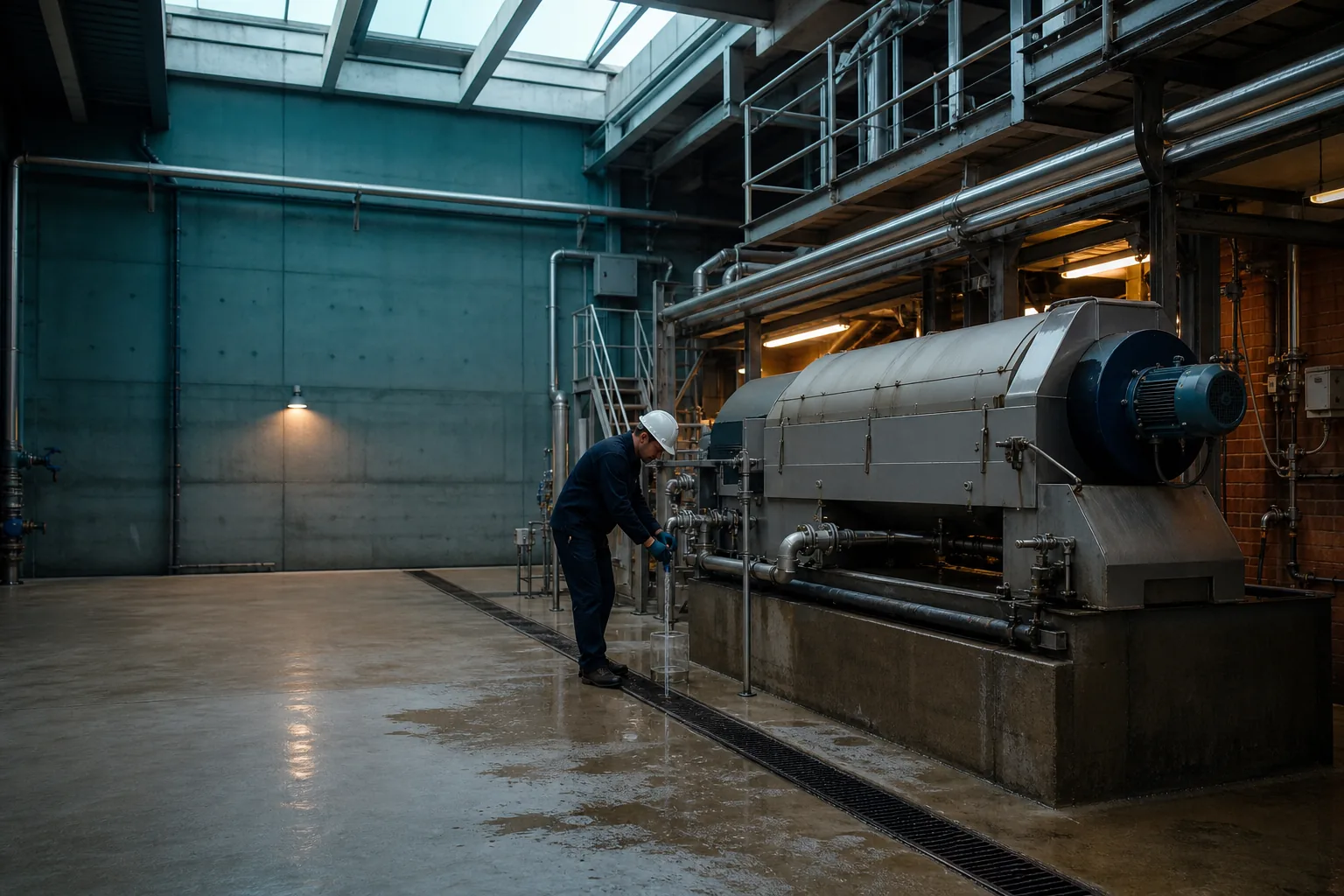
Define shear where it occurs
Shear resilience is an application result rather than a stand-alone certificate value. Map transfer pumps, static mixers, pipe length, valves, centrifuge feed zones or press conditioning stages before comparing candidates.
Run the same prepared solution through representative mixing energy. Observe whether floc reforms, whether fines appear in centrate or filtrate, and whether the equipment remains stable across normal feed variation.
Balance strength and permeability
Very large flocs are not automatically stronger, and dense flocs are not automatically more permeable. Centrifuges need capture through acceleration; belts and chamber presses need a structure that releases water without sealing the cloth.
Judge each profile with equipment-specific measurements. The belt-press diagnostic guide separates underconditioning, overconditioning and mechanical causes.
Transfer the trial into purchasing
Preserve the sample code, lot, active content, preparation recipe, dose basis and feed conditions. A purchase specification should describe the successful operating envelope rather than relying only on viscosity or a broad molecular-weight label.
Ask for packaging, cold/heat protection, storage and transfer requirements that fit the site. Confirm a receiving inspection and retain sample before full delivery.